
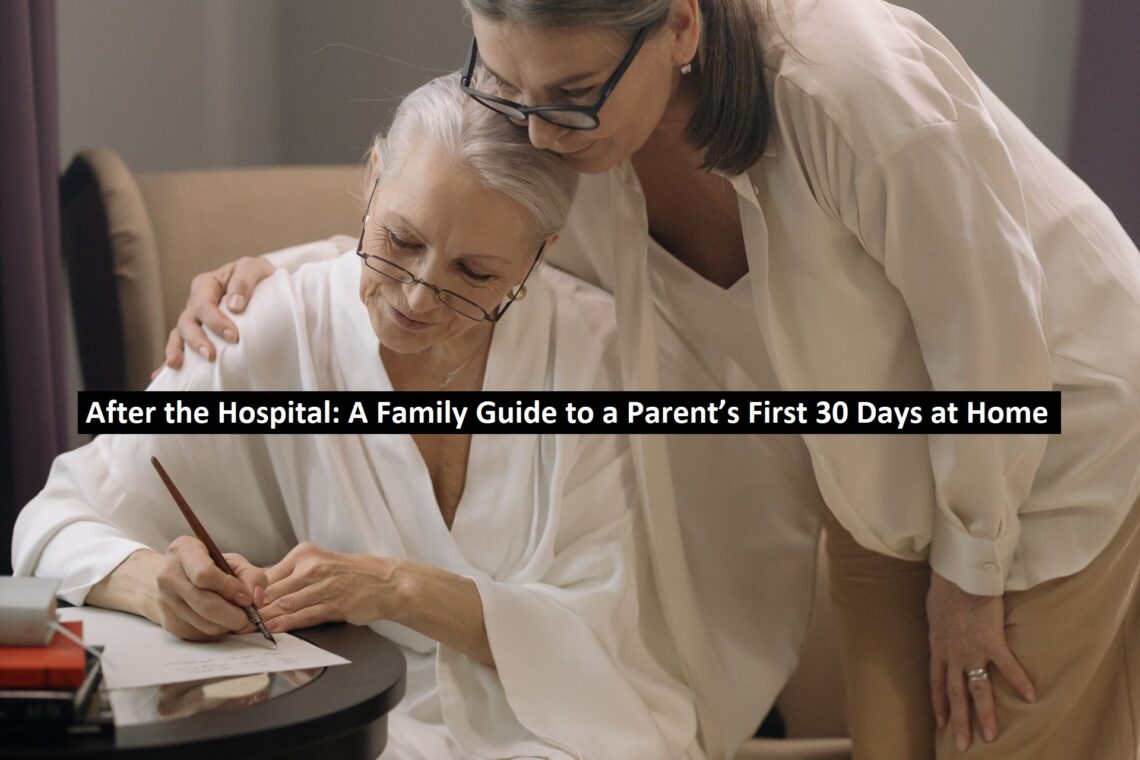
A parent’s hospital discharge often feels like the finish line. In reality, it’s the start of one of the most delicate stretches of their recovery. Older adults frequently come home weaker than they went in, with new medications, new restrictions, and a family that is suddenly expected to fill every gap. Readmissions in the month after discharge are common enough that Medicare runs a Hospital Readmissions Reduction Program that reduces payments to hospitals with high rates of them.
The good news is that many setbacks are preventable with some planning. Here’s how to approach the first 30 days.
Start Planning Before Discharge Day
Discharge planning should begin soon after your parent is admitted, not on the morning they are told they can leave. Ask to speak with the hospital’s case manager or discharge planner early, and ask:
- What is the expected discharge date, and what has to happen before then?
- Will my parent need rehabilitation, home health services, or medical equipment?
- Which new medications are being started, and which old ones should stop?
- What warning signs should send us back to the doctor or the emergency room?
- Who do we call with questions after hours?
Medicare publishes a free discharge planning checklist that walks families through these conversations. Print it and bring it to the hospital.
You also have a right to be part of the plan. If you don’t believe your parent is safe to go straight home, say so, and ask whether a short stay in a rehabilitation facility or another supportive setting would be appropriate.
Get the Medications Right
Medication mix-ups are one of the most common causes of problems after a hospital stay. Before leaving, ask for a written, reconciled medication list that shows every prescription, dose, and schedule, including anything that changed. Then:
- Fill new prescriptions on the way home, not the next day.
- Remove discontinued medications from the pill organizer and the kitchen counter.
- Set up a weekly pill organizer, or ask the pharmacy about blister packs.
- Bring the updated list to the first follow-up appointment.
Make the Home Recovery-Ready
A body recovering from illness or surgery is more prone to falls, and falls are the leading cause of injury among adults 65 and older. A few changes make a big difference:
- Set up a temporary bedroom on the main floor if stairs are difficult.
- Clear walkways of throw rugs, cords, and clutter.
- Add a shower chair, a raised toilet seat, and grab bars where possible.
- Keep a phone or medical alert device within reach of the bed and the bathroom.
- Stock easy, nutritious meals so no one has to cook the first week.
Book the Follow-Up Appointment Now
Aim for a visit with your parent’s primary care doctor within 7 to 14 days of discharge, or sooner if the hospital recommends it. That appointment is where medication questions get sorted out and early warning signs get caught. Bring the discharge paperwork, the medication list, and notes on anything you’ve noticed.
Read: The Great Remedy for Depression? It Could Be Workout
Watch for Warning Signs
Keep a simple daily log of how your parent is eating, sleeping, moving, and thinking. Call the doctor promptly if you notice:
- New or worsening confusion
- Fever, increasing pain, or redness at a surgical site
- Shortness of breath or swelling in the legs
- Dizziness, a fall, or a near miss
- Refusing food or fluids
Sudden confusion in an older adult can be a sign of delirium, which often has a treatable cause such as an infection, dehydration, or a medication reaction. It is never just “getting older,” and it should be reported right away.
Be Honest About What Family Can Handle
Many families plan to manage recovery themselves, then discover in the first week that the job is bigger than expected. Your parent may need help getting to the bathroom at night, supervision in the shower, or someone present most of the day. Meanwhile, family caregivers still have jobs, children, and their own health to look after.
If the math doesn’t work, there are options. Home health aides can cover part of the day. Adult day programs provide structure and supervision. And many assisted living communities offer short-term respite care for seniors: a furnished apartment for a few days or weeks, with meals, medication management, help with bathing and dressing, and staff available around the clock.
A short-term stay can be a smart bridge between the hospital and home, especially when a parent lives alone, the family caregiver works full time, or recovery is taking longer than expected. It also gives everyone a low-pressure look at community living, which can make a future conversation easier if longer-term support is ever needed.
Keep the Long Term in Mind
The first 30 days often reveal things that were easy to miss before the hospital stay: a nearly empty pantry, an unpaid bill, a new unsteadiness on the stairs. Treat those discoveries as useful information rather than a verdict. Talk with your parent, their doctor, and your siblings about what support would help them stay safe and independent over the coming year.
Frequently Asked Questions
How soon after a hospital stay should my parent see their doctor? Within 7 to 14 days is a common guideline, and sooner for people with heart failure, several new medications, or complicated conditions. Ask the discharge team for a specific recommendation.
Does Medicare cover a short-term stay after a hospital discharge? Medicare Part A may cover a skilled nursing facility stay after a qualifying inpatient hospital stay of at least three days, when skilled care is needed. Time spent under observation status does not count toward those three days. Medicare does not generally cover short-term respite stays in assisted living, which are usually paid privately or through long-term care insurance.
What is respite care? Respite care is short-term care that gives a family caregiver a break or bridges a gap, such as recovery after a hospital stay. It can happen at home, in an adult day program, or in a senior living community.
What are signs my parent isn’t ready to be home alone? Trouble getting to the bathroom safely, confusion about medications, falls or near falls, and not eating well all suggest that more support is needed, at least for a while.
Author’s Bio:
Author writes about senior care, dementia, and family caregiving for Victoria Commons Assisted Living in North Cape May, New Jersey.